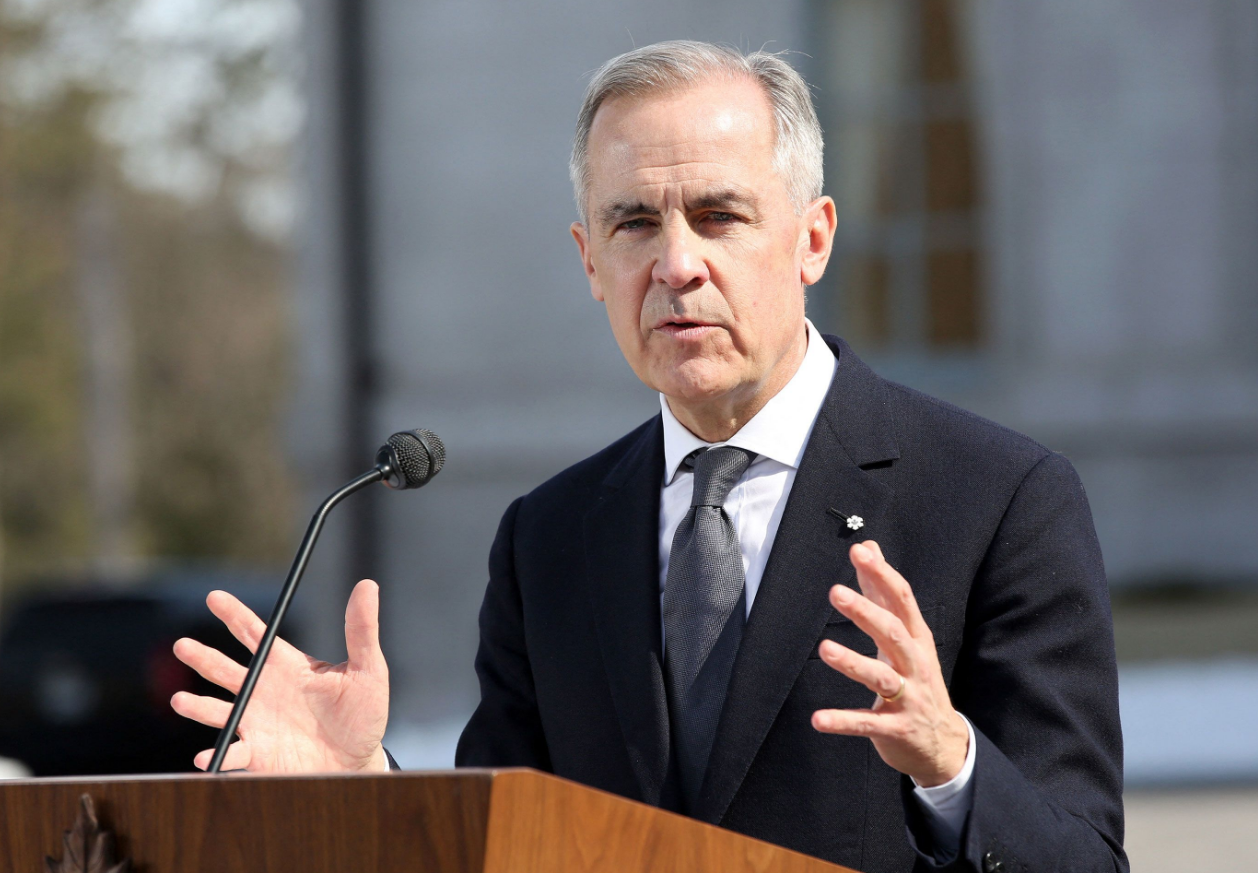
For years, Mark Carney was known primarily as one of the world’s most respected central bankers — a calm, analytical figure associated with financial stability, crisis management, and global economic policy. Unlike traditional politicians who rise through years of party organizing and election campaigns, Carney built his public reputation in boardrooms, international institutions, and economic forums. Yet over time, his name became increasingly connected not only with finance, but also with broader questions about leadership, climate policy, inequality, and the future direction of Canada itself.
Born in Fort Smith, Northwest Territories, and raised in Edmonton, Alberta, Carney grew up in a middle-class Canadian family that valued education and public service. His academic path was exceptionally strong from an early age. After studying economics at Harvard University, he continued at Oxford, where he earned advanced degrees that would eventually open the door to some of the most influential institutions in global finance.
Before entering public service, Carney spent more than a decade working for Goldman Sachs. During that period, he gained international experience in cities such as London, Tokyo, New York, and Toronto. His work exposed him to the realities of international markets, financial crises, and government decision-making at the highest levels. Supporters later argued that this experience gave him a practical understanding of how global economic systems actually function, while critics sometimes viewed his background as evidence of excessive closeness to financial elites.
Carney’s public profile changed dramatically when he became Governor of the Bank of Canada in 2008 — precisely at the moment when the global financial system was entering one of its worst crises in generations. Banks were collapsing, stock markets were unstable, and governments around the world faced enormous uncertainty. During this period, Canada’s banking system remained relatively stable compared to many other countries. Although numerous factors contributed to this outcome, Carney became widely associated with competent economic leadership and clear communication during crisis conditions.
His style differed from many public officials. He spoke in calm, measured language and often emphasized stability over political rhetoric. Even people with little interest in economics began recognizing his name because he represented reassurance during an unpredictable time. In many ways, his reputation was built not on charisma or populism, but on trust in expertise.
Carney’s international standing grew even further when he became Governor of the Bank of England in 2013, making history as the first non-British person to hold the position. The appointment itself reflected how highly he was regarded globally. However, the role placed him directly in the middle of one of Britain’s most politically turbulent periods: Brexit.
The Brexit years transformed Carney from a purely economic figure into a politically controversial one. His warnings about economic uncertainty connected to Britain leaving the European Union angered some politicians who accused him of fearmongering or political interference. Others praised him for openly discussing economic risks rather than avoiding difficult truths for political convenience.
This period highlighted one of the defining characteristics of Carney’s public image: he consistently positioned himself as someone focused on long-term consequences rather than short-term political popularity. Whether discussing interest rates, banking systems, climate risks, or global trade, he often argued that governments and businesses needed to think decades ahead instead of reacting only to immediate headlines.
Climate policy eventually became one of Carney’s major areas of focus. Long before many financial leaders treated climate change as a core economic issue, Carney argued that environmental instability could reshape markets, investments, and entire industries. He pushed financial institutions to consider climate-related risks more seriously and became a leading advocate for sustainable finance.
This shift broadened his appeal beyond traditional economic circles. Younger voters, environmental advocates, and international policymakers increasingly saw him not only as a banker, but also as someone trying to modernize how economic systems respond to global challenges.
Still, Carney’s growing visibility in political discussions also produced skepticism. Critics questioned whether someone with a background in elite financial institutions could fully understand the struggles of ordinary citizens facing housing costs, inflation, and economic insecurity. Others argued that technocratic leadership can sometimes feel emotionally distant from everyday life.
Despite those criticisms, Carney continued to attract attention because he represented something unusual in modern politics: a figure whose authority came primarily from competence and expertise rather than ideological performance. In an era dominated by polarization and social media conflict, his calm and highly structured communication style stood out sharply.
Another important aspect of Carney’s public persona is his internationalism. Throughout his career, he has emphasized cooperation between countries, institutions, and financial systems. Supporters see this as evidence of global vision and strategic thinking. Critics, however, sometimes argue that such global perspectives can conflict with national priorities or local concerns.
In Canada, discussions about Carney often reflect larger national debates about leadership itself. Some Canadians admire his intelligence, professionalism, and ability to navigate complex systems. Others worry that highly educated economic elites may not always connect with ordinary citizens emotionally or culturally.
Yet regardless of political opinion, few deny that Mark Carney has become one of the most influential Canadian public figures of his generation. His career bridges multiple worlds — finance, international diplomacy, environmental policy, and increasingly politics. Whether viewed as a reform-minded technocrat or a symbol of establishment expertise, Carney’s influence on conversations about Canada’s future remains substantial.
What makes his story particularly interesting is that it reflects a broader global trend: the growing intersection between economics and politics. In today’s world, financial crises, climate change, inflation, technology, and inequality are no longer separate technical issues — they shape political identity, public trust, and even democracy itself. Carney’s career exists precisely at that intersection.
For supporters, he represents intelligent leadership adapted to a complicated modern world. For critics, he represents a highly globalized political and economic class that may feel disconnected from everyday realities. Either way, Mark Carney continues to shape discussions not only about economics, but about what kind of leadership modern societies actually need.