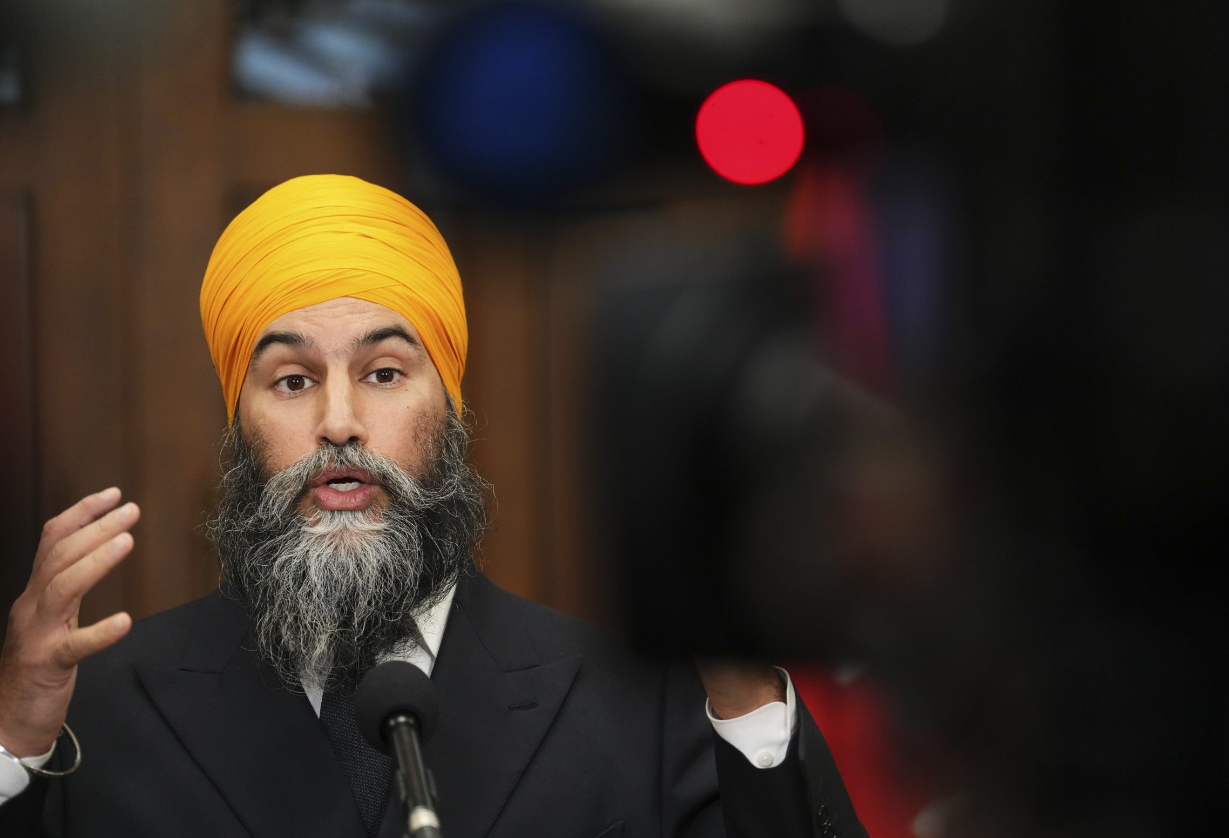
Jagmeet Singh entered Canadian federal politics at a time when political leadership was increasingly shaped by media visibility, cultural identity, and emotional connection with voters. Unlike many traditional politicians whose careers followed predictable institutional paths, Singh quickly became known for combining activism, progressive politics, and personal storytelling in a way that resonated strongly with younger Canadians.
Born in Scarborough, Ontario, Singh spent parts of his childhood in Newfoundland and Windsor before eventually settling in the Greater Toronto Area. His upbringing within a Sikh Punjabi family played a major role in shaping his identity and worldview. From an early age, he experienced both cultural pride and discrimination, experiences that later influenced many of his political priorities.
Before entering politics, Singh worked as a criminal defence lawyer. This legal background exposed him to issues involving inequality, policing, poverty, and systemic discrimination. Rather than approaching politics purely through ideological theory, Singh often frames political issues in terms of real human experiences and emotional consequences.
When he entered Ontario provincial politics, Singh quickly gained attention for his communication style. He appeared more modern and socially connected than many conventional politicians. His carefully tailored public image — including colorful turbans, tailored suits, and strong social media presence — made him visually distinctive in Canadian politics.
Yet Singh’s visibility also came with challenges. As one of the first major Sikh politicians to receive widespread national attention in Canada, he became the target of racist and Islamophobic attacks, despite being Sikh rather than Muslim. Instead of responding with anger, Singh often addressed such moments calmly and publicly, which helped strengthen his reputation as a composed and empathetic figure.
His rise to leadership of the New Democratic Party marked a historic moment. Singh became the first visible minority to lead a major federal political party in Canada. International media covered his leadership as an example of Canada’s multicultural political identity. For many supporters, his leadership symbolized a generational and cultural shift in Canadian politics.
Unlike politicians who focus heavily on nationalism or economic markets, Singh consistently centers his messaging around social inequality and affordability. Housing costs, healthcare access, student debt, workers’ rights, and wealth inequality remain central themes in his speeches and campaigns. He often argues that economic systems increasingly favor wealthy corporations while ordinary citizens struggle with rising living costs.
One reason Singh connects strongly with younger voters is his communication style. He tends to speak in direct, emotionally accessible language rather than relying heavily on bureaucratic or technical terminology. On social media, he frequently appears informal, approachable, and conversational — a significant contrast to more traditional political figures.
Supporters see this accessibility as authenticity. Critics, however, sometimes argue that Singh’s political style can prioritize image and emotional branding over policy detail. Conservative opponents especially criticize some of his economic proposals as unrealistic or financially unsustainable.
Still, Singh’s political identity extends beyond policy debates alone. Much of his influence comes from the symbolic role he plays within Canadian society. To many supporters, he represents a version of Canada that is diverse, inclusive, and openly multicultural. His visibility challenges older assumptions about what political leadership “looks like” in North America.
Mental health and emotional openness also play an unusually important role in Singh’s public persona. He has spoken publicly about personal grief, emotional struggles, and the pressures of public life. In a political culture that often rewards emotional distance, Singh’s openness makes him stand out.
At the same time, Singh faces structural political challenges. Canada’s political system often makes it difficult for third parties like the NDP to compete directly for power against larger parties such as the Liberals and Conservatives. This creates constant pressure for Singh to balance idealism with political pragmatism.
Critics from the left sometimes argue that the NDP under Singh has compromised too much with mainstream politics. Meanwhile, opponents on the right accuse him of promoting excessive government intervention and unrealistic social spending. These tensions reflect the broader difficulty of maintaining progressive political ideals within highly competitive electoral systems.
Another important dimension of Singh’s political identity is his focus on empathy. He frequently argues that politics should not only manage economies or institutions, but should also improve people’s daily lives in practical ways. This focus on emotional connection has become one of his defining leadership traits.
Singh’s rise also reflects broader global trends in progressive politics. Around the world, younger generations increasingly expect politicians to discuss identity, mental health, inclusion, and social inequality more openly. Singh’s political style fits naturally into that cultural shift.
Despite political obstacles, Singh remains one of the most recognizable figures in modern Canadian politics. Even people who disagree with his policies often acknowledge his communication skills and personal charisma. His influence extends beyond elections because he represents broader conversations about race, representation, and generational change within democratic societies.
For supporters, Jagmeet Singh represents compassion, inclusivity, and a more human style of politics. For critics, he represents an overly progressive political culture that prioritizes symbolism over practical governance. Regardless of perspective, his role in reshaping political discourse in Canada is impossible to ignore.
In many ways, Singh’s career is about more than party politics alone. It is also about identity, visibility, and the changing expectations people place on political leaders in the twenty-first century.